The SS United States Is Now Destin’s Newest Dive Site
The SS United States Is Now Destin’s Newest Dive Site
On Wednesday, November 11, 2026, Destin watched a piece of American history slip beneath the Gulf. The SS United States, the fastest ocean liner ever built, went down about 22 nautical miles southwest of Destin-Fort Walton Beach and became the world’s largest artificial reef. At 990 feet, she is about 100 feet longer than the Titanic, and her next chapter starts on the seafloor, where divers are expected to be able to visit her from dawn on Thursday, November 12.
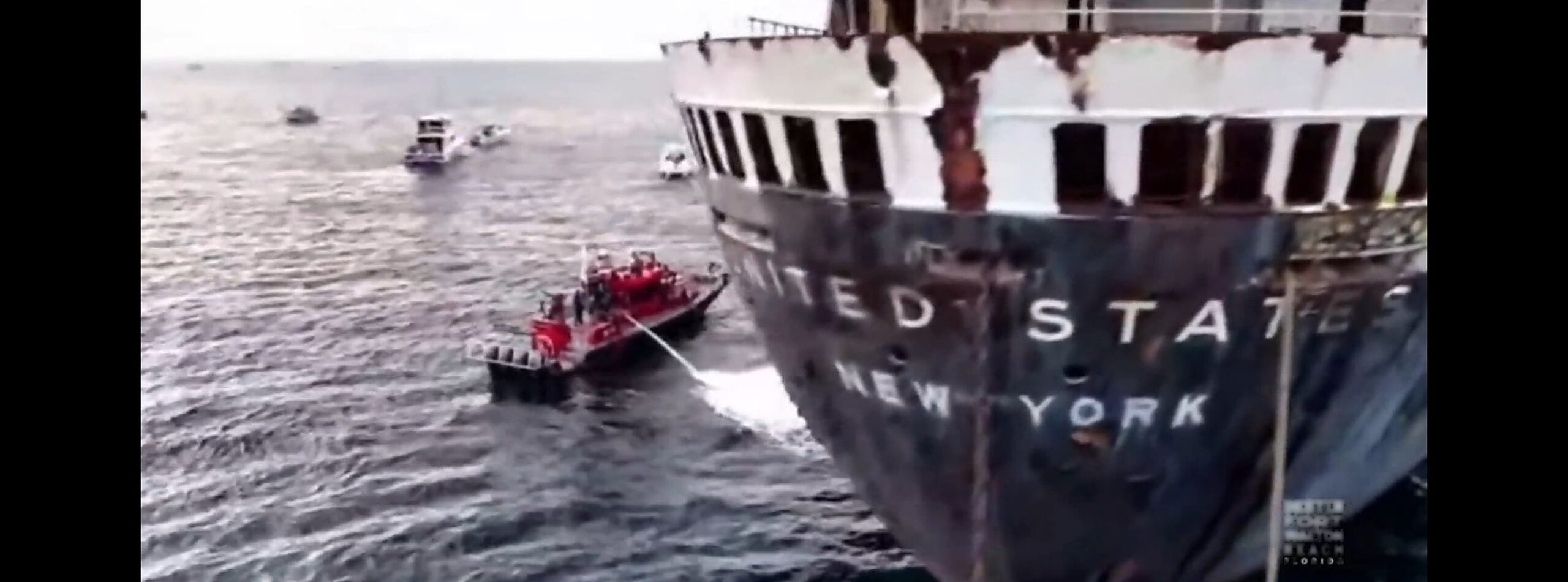
She did not go quietly. Crews spent the whole day flooding her with fire hoses, and she held on the surface late into the evening, still afloat at 8:52 PM, before she started rolling at 8:55 PM and was completely gone by 9 PM. Dozens of boats ringed the site to watch, and the sinking took much longer than anyone anticipated. Now the wait is over, and the largest artificial reef in the world sits 22 miles off the Destin beach.
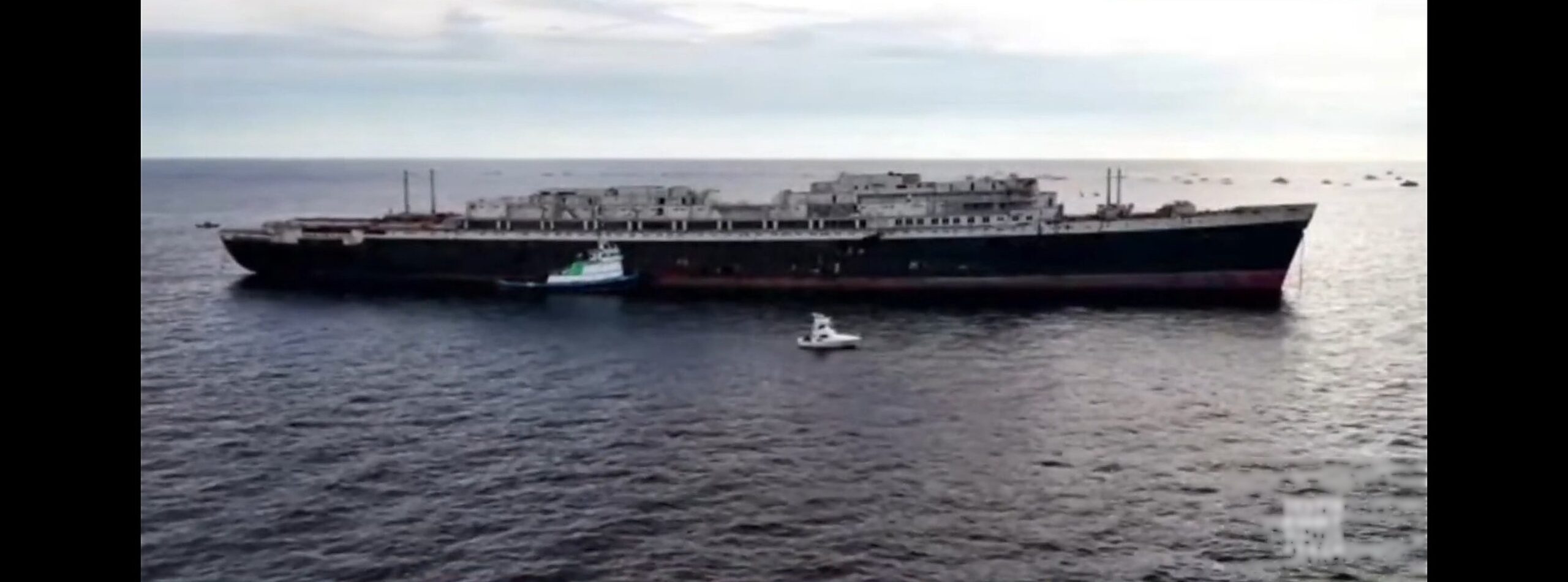
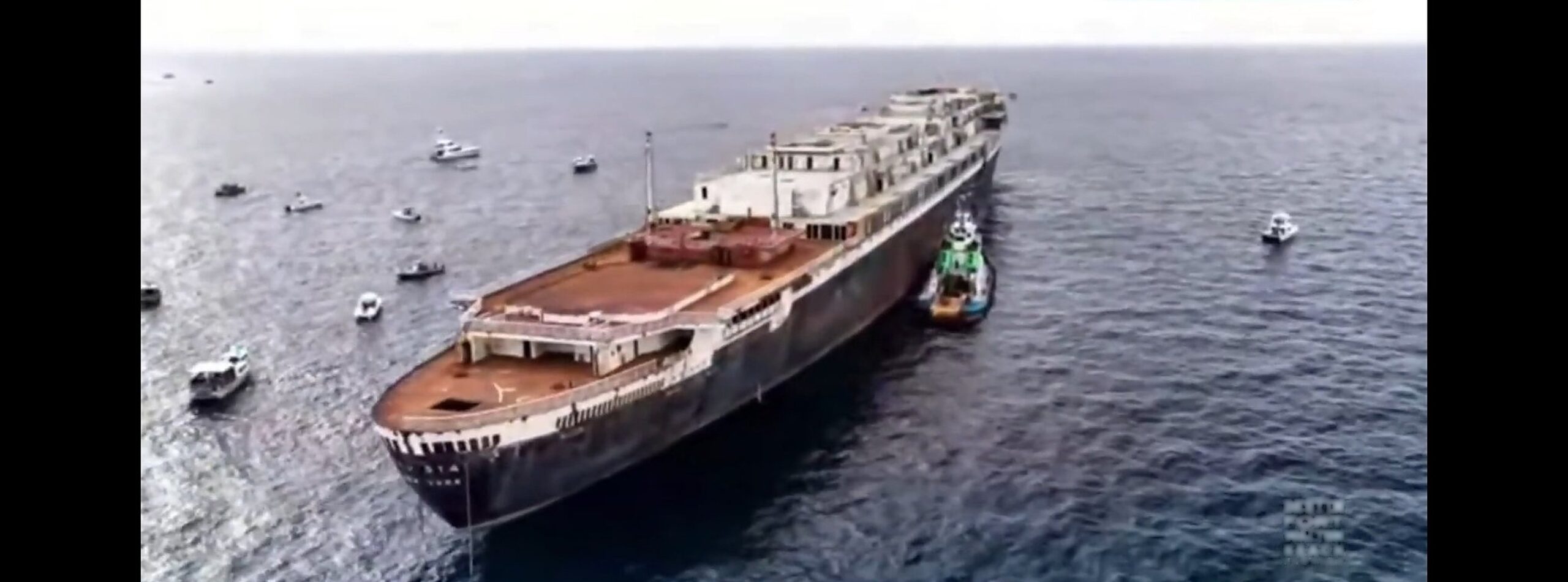
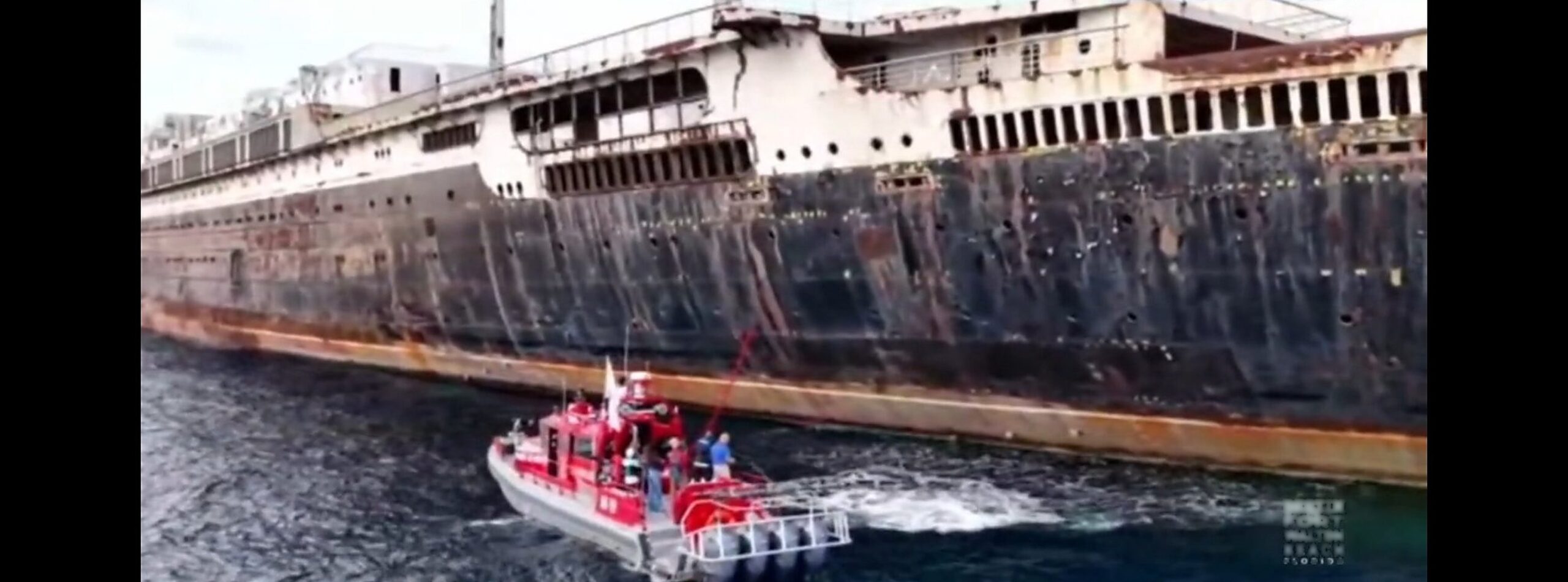
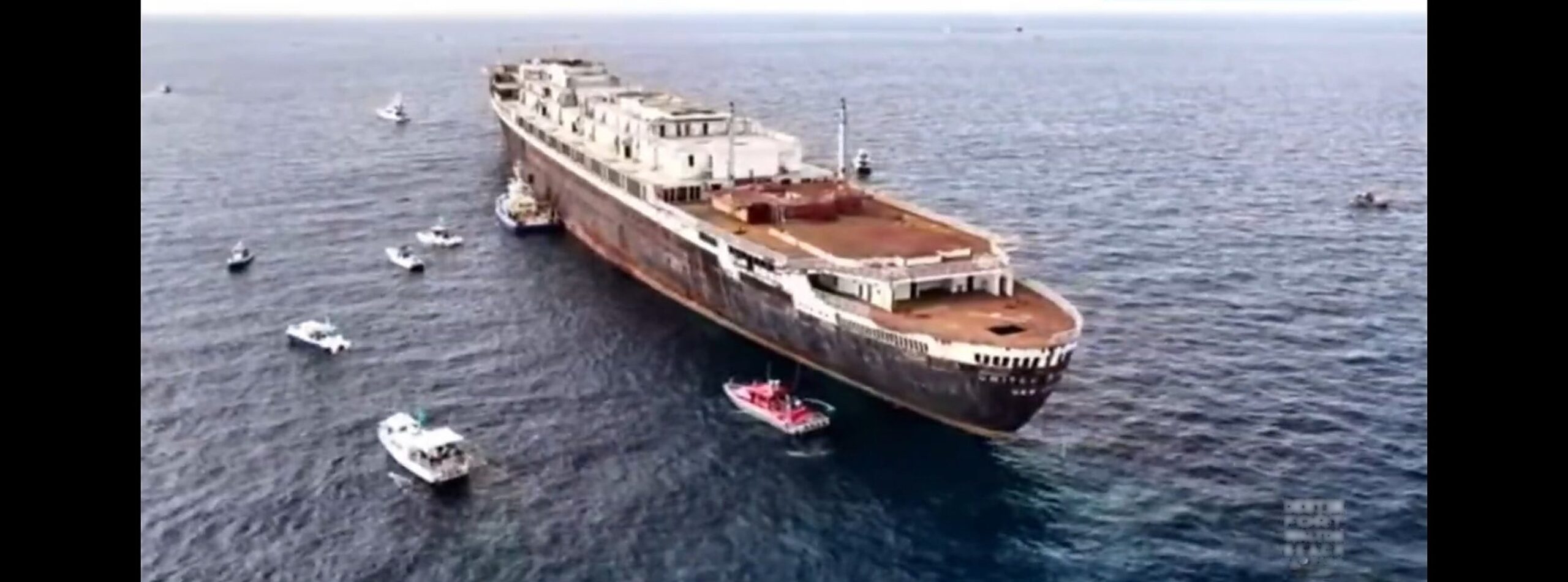
Photos in this post are frames from the Destin-Fort Walton Beach live feed of the sinking, November 11, 2026.
The Fastest Ship Ever to Cross the Atlantic
The SS United States was launched in 1952, and she was built for one thing above all else: speed. On her maiden voyage on July 3, 1952, she crossed the Atlantic in 3 days, 10 hours, and 40 minutes, averaging 35.59 knots, and took the Blue Riband, the prize for the fastest crossing. She beat the Queen Mary’s 14-year-old record by more than 10 hours, and she took the westbound record on the way home too, returning in 3 days, 12 hours, and 12 minutes. She still holds the transatlantic speed record for an ocean liner, more than 70 years later, and no passenger ship has ever beaten her time.


The power behind that speed was staggering: four steam turbines producing 240,000 horsepower, driving four 18-foot propellers. On her sea trials she averaged 38.25 knots, and her top speed was kept secret for decades because of her military role. She could even steam backwards at more than 20 knots, and she could cross the Atlantic without refueling.

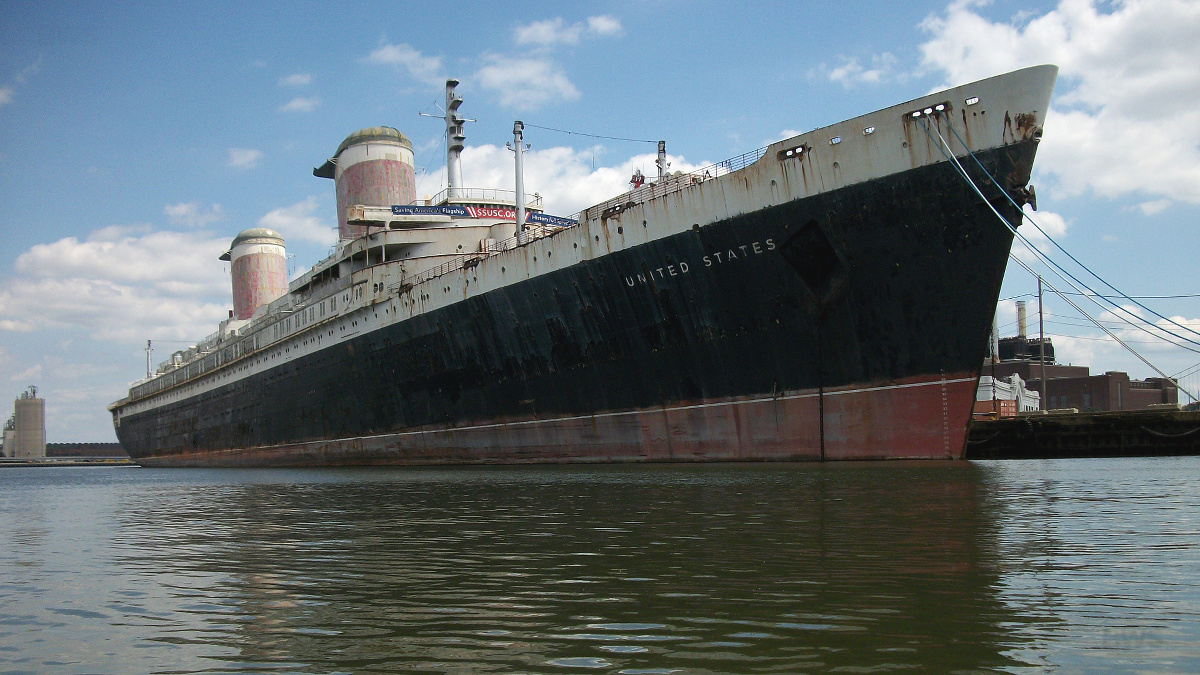
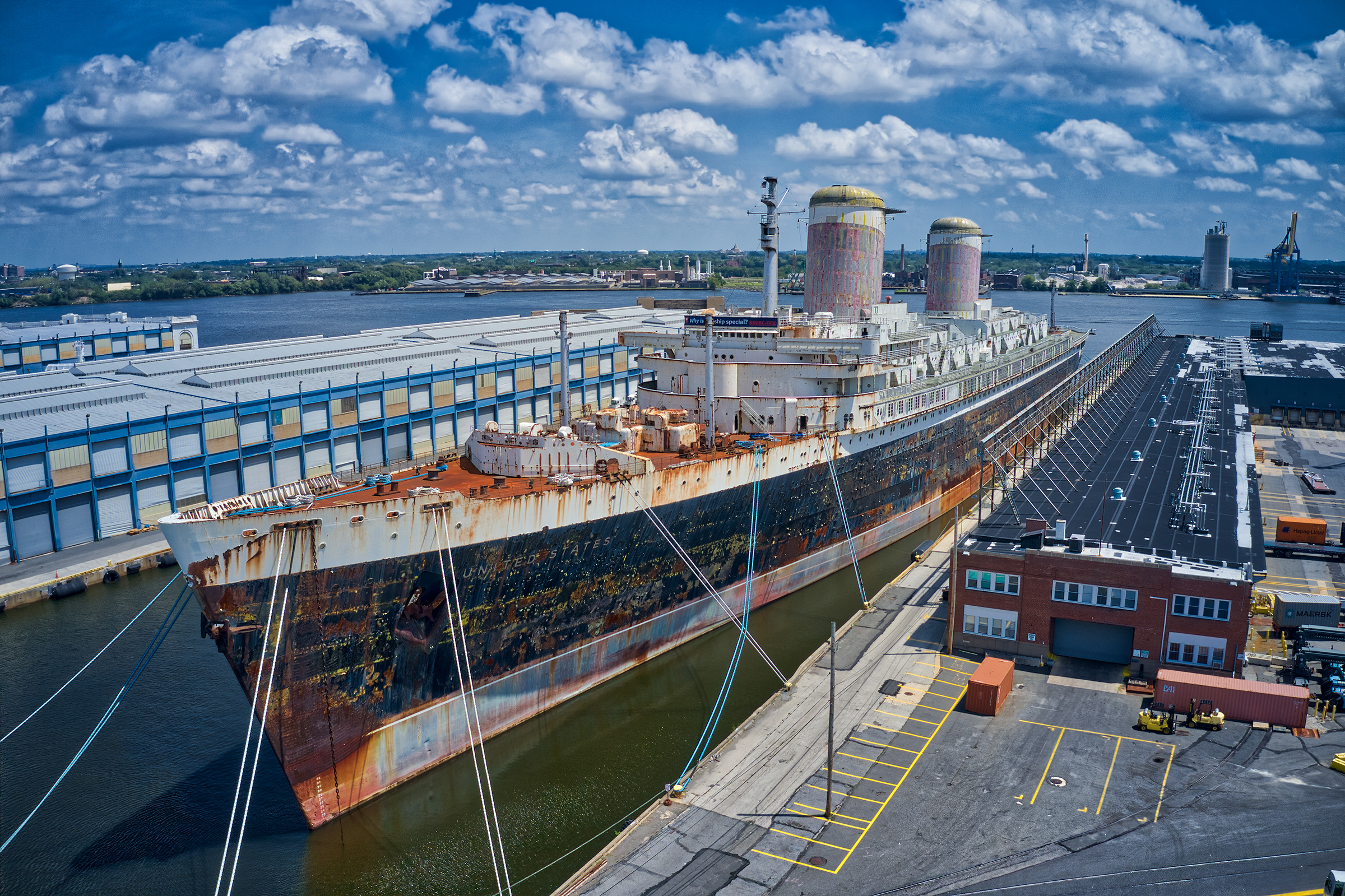
She carried presidents, movie stars, and thousands of ordinary travelers in her working years. But the jet age ended the era of the great liners. She was retired in 1969, and after decades of uncertainty she ended up docked in Philadelphia, where she sat from 1996 until February 2025 while preservation groups fought to save her.
A Ship Built for Two Jobs
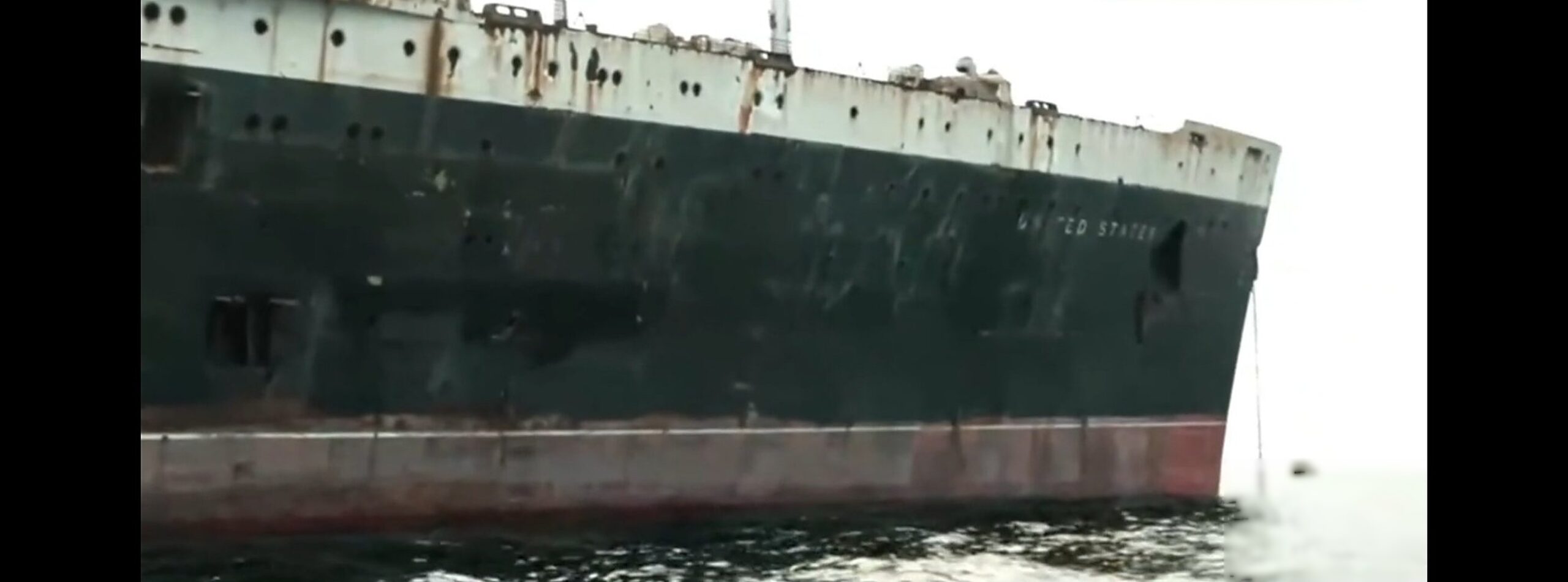
The SS United States was never just a passenger liner. She was designed from the keel up by naval architect William Francis Gibbs as a ship with a second job, and the United States government paid $50 million of her $78 million construction cost for it. In wartime, she could be converted into a troopship carrying 15,000 troops, or into a hospital ship, and the conversion could be done in days, not the months older liners needed. Her speed was part of the plan: a troopship that could outrun a submarine.
She never served as a troopship, though she was put on standby during the Cuban Missile Crisis in 1962. Instead she spent 17 years carrying passengers across the Atlantic, the fastest liner on the ocean, with a secret military turn of speed hidden in her engine rooms.

A Ship That Could Not Burn
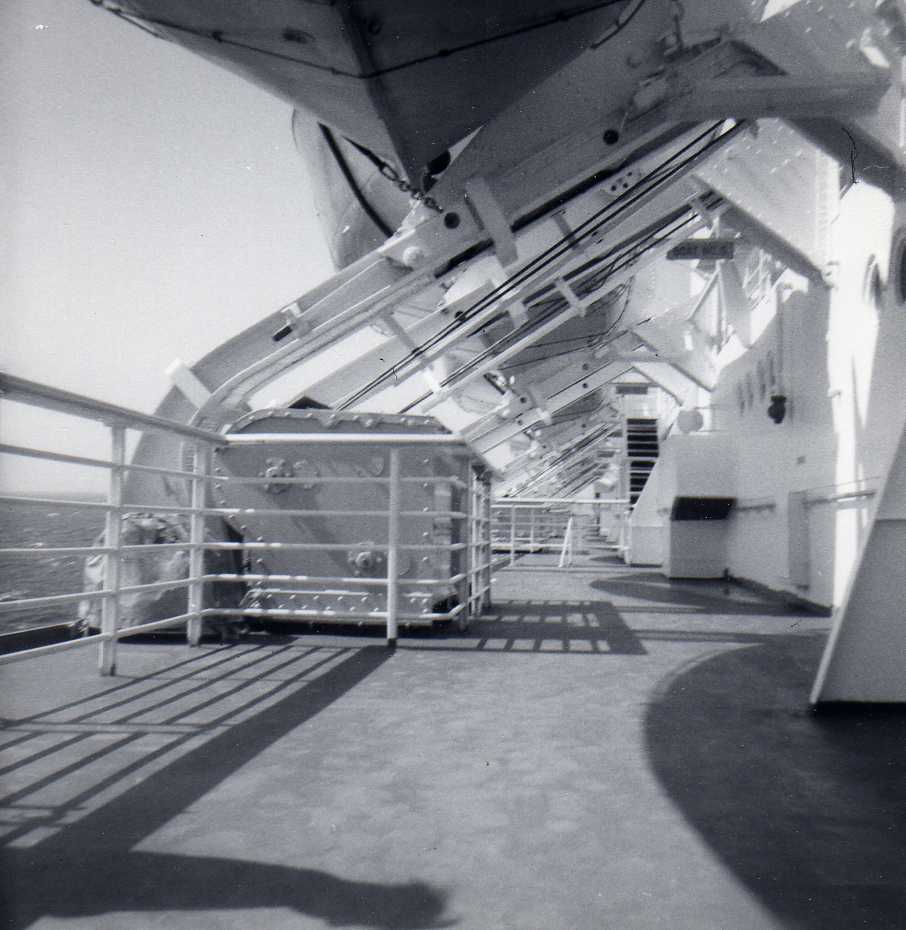
Gibbs had one obsession to match his obsession with speed: fire. The French liner Normandie had burned and capsized in New York in 1942 while being converted to a troopship, and Gibbs was determined his ship would not do the same. So the SS United States was built with almost no wood at all. There was no wood in her framing, her accessories, her decorations, or her interior surfaces. Her furniture and fabrics were made of glass, metal, and spun glass fiber. Her coat hangers were aluminum. The only wood aboard was the galley butcher block and the ballroom grand piano, which was made of a rare fire-resistant wood, and even that piano was only accepted after a demonstration in which gasoline was poured on the wood and lit, and the wood itself did not catch fire.
Her superstructure used more aluminum than any construction project before it, which also made her lighter and faster. At 101 feet wide, she was built to clear the Panama Canal locks with just two feet to spare on each side.


How the SS United States Got to Destin
Okaloosa County bought the ship on August 30, 2024, for $10.1 million, with a bold plan: clean her up, tow her to the Gulf, and sink her on purpose as an artificial reef and a dive attraction. In February 2025 she was towed from Philadelphia to Mobile, Alabama, where crews spent months on environmental cleanup and preparation before she went down.


The plan drew a last-minute legal challenge. On November 6, a federal judge denied a lawsuit seeking to halt the sinking, and the tow went ahead. The ship left Mobile on November 9, 2026, bound for a patch of Gulf seafloor southwest of Destin that had been picked out long in advance.
The SS United States Sinking: Moved Up a Day for the Weather
The sinking was scheduled for Thursday, November 12, but the forecast forced a change. With heavy winds and unsafe weather expected, Okaloosa County moved the deployment up a day, to Wednesday, November 11. Deployment operations began in the early afternoon, with fire boats pumping water into the hull through hoses to flood her. She held strong late into the evening, still on the surface at 8:52 PM, then started rolling by 8:55 PM and was completely gone by 9 PM. The sinking took much longer than anyone anticipated, but it is finally complete. She went down the same day, settling upright on the seafloor while spectator boats watched from a safe distance.
Dozens of boats gathered offshore to watch her go down, a flotilla of spectator and support vessels ringing the site 22 miles out. On shore, a viewing party gathered at AJ’s Seafood and Oyster Bar on Destin Harbor to follow the live feed as the day stretched into the night. The whole coast watched a 990-foot ship refuse to go down, hour after hour, until she finally rolled and slipped under in the dark.


Watch her final moments below: the ship listing in the evening light, then the stern rising and going under.
Her new address is about 22 nautical miles southwest of Destin-Fort Walton Beach and 32 nautical miles southeast of Pensacola, at 30 degrees 07.148 minutes North, 86 degrees 46.755 minutes West. She sits about 12 nautical miles from the USS Oriskany, the aircraft carrier sunk as an artificial reef in 2006, so Destin now has two of the Gulf’s best-known wrecks within a short boat ride of each other.
She rests in about 180 feet of water, with her top deck about 55 to 60 feet below the surface. That depth puts her within reach of experienced recreational divers, and it makes her the largest artificial reef in the world.
The SS United States by the Numbers
- Length: 990 feet, about 100 feet longer than the Titanic
- Maiden voyage: July 3, 1952, New York to Southampton
- Atlantic crossing record: 3 days, 10 hours, 40 minutes at 35.59 knots
- Power: 240,000 horsepower from four steam turbines
- Passengers: 1,928, with a crew of 900
- Troopship capacity: 15,000 troops, convertible in days
- Cost to build: $78 million in 1952
- Retired: 1969, docked in Philadelphia from 1996 to 2025
- Bought by Okaloosa County: August 30, 2024, for $10.1 million
- Sunk: November 11, 2026, 22 nautical miles southwest of Destin
- Resting depth: about 180 feet, top deck 55 to 60 feet down
- Reef status: the world’s largest artificial reef
What the New Reef Means for Your Destin Trip
Recreational divers are expected to be able to visit the SS United States from dawn on Thursday, November 12. Dive operators in Destin and Fort Walton Beach are already planning trips out to the site, and the reef is expected to become one of the most talked-about dives in the Gulf within its first season.
Even if you never put on a tank, the reef changes Destin. A 990-foot ship on the seafloor becomes a marine habitat fast, drawing reef fish, snapper, grouper, and the bigger pelagic species that follow them. That is good news for fishing charters and deep sea fishing charters, and it gives our Destin on the water guide another reason to get out on a boat.
The same Gulf waters already hold the wildlife in our sea turtles, dolphins, and rays wildlife calendar: dolphins feed in the shallows year-round, rays glide over the sandbars, and sea turtles swim the same water the ship now rests in. A reef this size will only add to that life over time. For visitors who would rather stay on the surface, a boat tour, a dolphin cruise, or a snorkeling tour out of Destin Harbor is the easy way to see the waters the reef now sits in.
There is also a piece of the story still to come on land. The SS United States Conservancy plans a ship museum in Destin, so the ship’s history will have a home ashore as well as a reef offshore.
The Bottom Line
The SS United States crossed the Atlantic faster than any ocean liner in history, spent decades waiting in Philadelphia, and found her second life off Destin. She is now the world’s largest artificial reef, 22 miles from the beach, and she gives divers, anglers, and Destin visitors a new reason to get out on the Gulf.
Ready to see Destin’s newest dive site for yourself? Follow @destindriftstays on Instagram for Destin guides, sunset reels, and the latest on the reef. And when you are ready to book, book direct at destindrift.com: our Pelican Beach Resort condos put you right on the white sand, and the Southbay Townhouse puts your group in a lakefront home minutes from the harbor and the boats that head out to the Gulf.
Disclosure: this post contains affiliate links to TripShock. If you book through them, we may earn a small commission at no extra cost to you.